In a competitive property market, save the listing, launch the address search, check the street and contact the advertiser with a prepared financing position. Speed helps organise the first steps, but it does not justify an unverified offer or removing protections that are appropriate to your circumstances.
Quick Answer: Save the listing URL immediately, start an address search, review the street and call the advertiser with clear criteria, availability and financing preparation. Treat five minutes as enough to organise the first checks, not to approve the property. Confirm the location, view the home, review documents and obtain suitable advice before making a financial commitment.
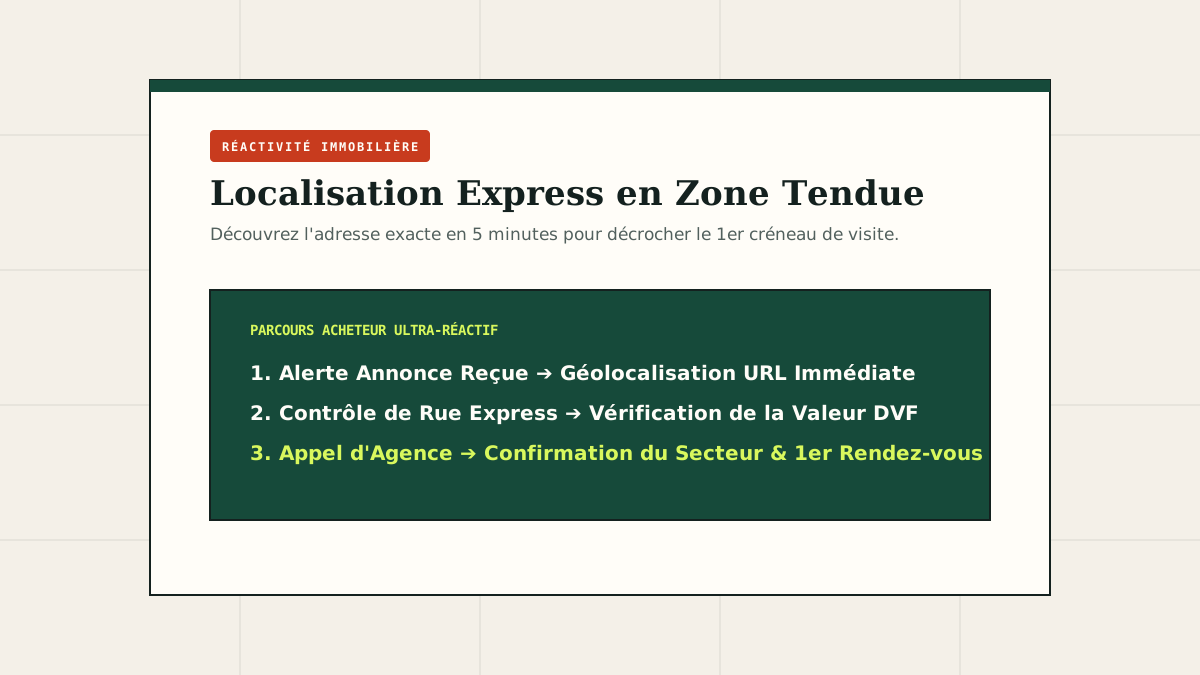
Why does a competitive market make address checking harder?
Popular listings can attract many enquiries, while the portal may show only a broad area. Buyers then face two pressures at once: they need to decide whether the location is suitable and they need to request a viewing before available times fill.
The wrong response is to replace missing information with confidence. An approximate pin does not become exact because the listing is new, and an attractive street does not validate the condition or paperwork. The useful response is to run independent tasks in parallel:
- Save the listing and reference.
- Start the location research.
- Prepare a concise viewing request.
- Gather evidence of your financing position through the appropriate channel.
- List the documents and questions needed before an offer.
This method improves readiness without promising priority. The advertiser or agent still controls the viewing schedule and may apply criteria required by the seller.
Which details should you capture as soon as the alert arrives?
Save the direct property-page URL, not only a screenshot or search-results page. Record the town, postcode, floor area, room count, floor, outdoor space, energy information, asking price and publication time shown on the page.
Download or note the photographs that contain exterior evidence. Useful clues include balcony patterns, roof shape, a view towards a landmark, road markings, neighbouring buildings and visible shop fronts. Separate objective clues from phrases such as “steps from the station”, which may describe a broad area.
Also note anything missing. No exterior photograph, unclear floor number or a very broad neighbourhood should lower your confidence in a quick address match. Missing evidence is part of the assessment, not a reason to guess.
How can you launch an address check in five minutes?
1. Preserve the listing link
Open the individual listing and save its URL, reference and key facts. This gives the search and the agent enquiry a common identifier.
2. Start the link-based search
Submit the URL to your chosen workflow while you review the photographs. A search may take longer than the initial setup, and some listings will not produce a confirmed address.
3. Define the likely area
Use the town, postcode, stated transport and map area to identify the broad sector. Do not read an approximate portal marker as a house number.
4. List the confirmation clues
Write down two or three exterior features that a result should match. When an address arrives, check the road orientation, building type and surroundings rather than accepting the first plausible pin.
5. Prepare the viewing request
Have the listing reference, your key criteria, genuine availability and current financing position ready. Ask the agent to confirm the address or meeting point instead of claiming that a candidate location is certain.
Five minutes starts the process. It cannot guarantee an address, establish value or replace the later checks.
How should you assess the street without delaying contact?
Focus first on deal-breakers that can be checked quickly: an impossible commute, an unsuitable road, inaccessible terrain or a clear mismatch between the building and listing. If none appears, request the viewing while continuing the deeper research.
Test the journey at a realistic hour rather than relying on straight-line distance. Look at railway lines, major roads and public transport access, then turn each observation into a question for the visit. A map cannot tell you how much noise reaches the rooms or whether the main windows face another side.
If you consult French DVF transaction data, select genuinely comparable sales and note their dates. Past transactions can provide context, but they do not instantly determine the current value of a particular home. Condition, floor, outdoor space, charges and legal context still matter.
What makes a viewing request easy to process?
Use a short, factual message. Include the listing reference, why the basic property criteria fit, your realistic availability and whether your financing preparation has begun. Do not exaggerate approval, cash position or familiarity with the street.
Ask two or three questions that decide whether the viewing remains useful. Examples include the exact meeting location, room orientation, current listing status and documents already available. A focused request is easier to answer than a generic demand for all information.
Share sensitive financial documents only through the process and channel requested by a legitimate professional. Preparation does not require broadcasting identity or banking information to every new listing contact.
Which checks must remain before an offer?
In a competitive market, never sacrifice due diligence for speed of offer. As soon as the address is verified: audit parcel boundaries via cadastre.gouv.fr, cross-reference official energy certificates on the ADEME observatory, inspect local zoning rules (PLU), and demand the last 3 years of AGM minutes to evaluate co-ownership reserve funds and arrears prior to signing.
How can FindAddressNow fit into a rapid workflow?
For a link from a currently supported portal, start an address search with FindAddressNow while you prepare your viewing questions. The service searches for an address and coordinates; it does not approve the property or guarantee that every listing can be resolved.
The How it works section explains result delivery, and the pricing section sets out available search options. Check the current list of compatible portals before using a credit.
If your alert comes from a specific French portal, the guides for Leboncoin listings and Logic-Immo listings help distinguish an individual advert URL from a general search page.
How can you avoid speed-driven mistakes?
Set decision gates before browsing. For example, “request a viewing if the commute and building type fit” is a reasonable early gate; “make an offer if the map looks right” is not. Each stage should require only the evidence appropriate to it.
Keep uncertain facts labelled as uncertain. If the address, floor or included annexes conflict across sources, ask for confirmation. Do not allow the fear of another buyer to turn a contradiction into a minor detail.
Finally, decide in advance who can review an offer or document at short notice. Having a notary, broker or adviser identified is more useful than improvising legal or financing assumptions under a deadline.
Frequently asked questions
Can every new listing be located immediately?
No. Results depend on the portal, listing content, property type and available clues. A new but sparse listing may remain inconclusive.
Does knowing the address put me first in the viewing queue?
No. It helps you decide and prepare, but the advertiser controls scheduling. Make a clear request and remain available without claiming priority.
Should I make an offer on the day of the viewing?
Only after considering the property, documents, financing and advice relevant to your situation. A quick timetable does not reduce the importance of those checks.
Can DVF data confirm the asking price is fair?
No single past sale can confirm current value. Use comparable transactions as context and account for the actual home's characteristics and condition.
Should I waive conditions to compete?
Do not waive an important protection without case-specific advice and a clear understanding of the risk. Speed alone is not a sufficient reason.
How should you structure rapid due diligence in a fast-moving property market?
To react swiftly without skipping essential technical verifications, follow this accelerated 4-point protocol:
- Verify parcel boundaries and plot footprint on cadastre.gouv.fr: Confirm exact cadastral references and land area within minutes of discovering the listing.
- Cross-reference real market prices on DVF: Compare the seller's asking price per square meter against notarized transaction data for the same street over the last 24 months.
- Audit DPE credentials on the national ADEME registry: Confirm the validity of energy performance certificates and estimated energy cost ranges.
- Schedule an official viewing with the agent or seller: Confirm all technical findings on-site and request the complete Technical Diagnostic File (DDT) before presenting a formal offer.
Already have a listing?
Find an address