When an auction listing does not clearly show the address, start with the official documents and any cadastral reference before comparing photographs. This preparation helps you inspect the street and parcel before the viewing, but it never replaces the sale conditions or advice from the notary, lawyer or other professional handling the procedure.
Quick Answer: Start with the official auction notice, municipality and any cadastral section or parcel number. Cross-check the parcel, facade photographs and surrounding roads, then ask the notary, lawyer or auction platform to confirm the address. Complete those checks before paying a deposit, travelling or setting a bid limit, and rely on the official documents for the sale terms.
Why can an auction property's location be difficult to confirm?
Auction notices vary in presentation and purpose. One may state the full address in a legal attachment while the public summary shows only a municipality. Another may identify a cadastral parcel or condominium lot without making the street number prominent.
The property may also be occupied, and access is controlled through an official viewing. That is a reason to use the approved procedure, not to approach occupants directly. Your location research should answer practical questions about the street and travel plan while leaving the interior inspection to the authorised appointment.
The consequences of a mistake are greater than an ordinary browsing inconvenience. You may misunderstand which lot is offered, overlook a separate cellar or parking space, or inspect a neighbouring building with similar architecture. Keep the legal description and the physical location linked throughout the research.
Which auction documents contain the most useful address clues?
| Source | Possible clue | Important limitation |
|---|---|---|
| Official auction notice | Municipality, address, viewing details | A summary may omit attachments |
| Sale conditions | Property and lot designation | Legal terminology may need professional explanation |
| Description report | Rooms, access, occupation and visible condition | Describes a particular inspection date |
| Cadastral reference | Section and parcel | May identify a whole building, not one apartment |
| Photographs | Facade, entrance and neighbouring structures | Can be cropped, old or non-exhaustive |
| Platform page | Timeline and contact route | Must be checked against authoritative documents |
Download or save the documents available through the official route and note their dates. If two sources conflict, ask the professional responsible for the sale which document governs rather than choosing the more convenient description.
How can you locate the auction property step by step?
1. Read the legal attachments before using maps
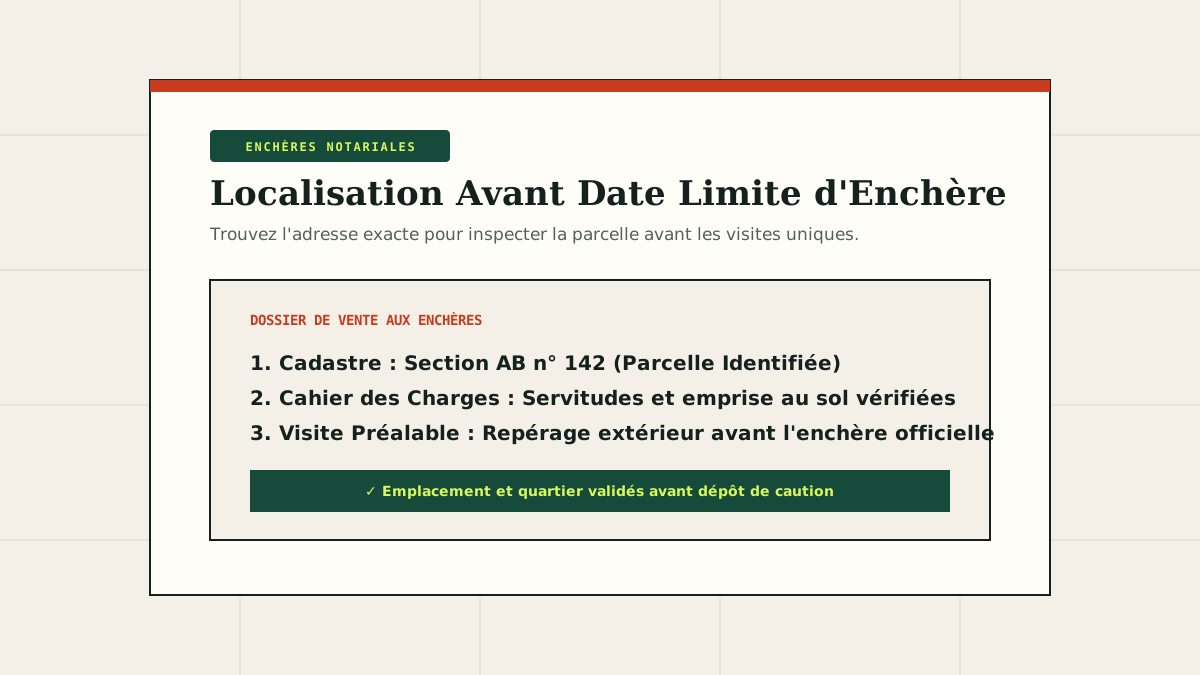
Search for the full property designation, cadastral section, parcel, condominium lot and viewing instructions. A reference such as “Section AB, parcel 142” is more useful than a broad neighbourhood label, but it still needs to be matched to the property offered.
2. Open the correct municipality on the cadastral map
Use the official French cadastral map or another suitable public map. Locate the section and parcel, then identify adjoining streets and access. Check whether the parcel contains one house, several buildings or a large condominium complex.
3. Compare the exterior evidence
Match roof shape, facade materials, window alignment, neighbouring buildings and road orientation with the auction photographs. Use more than one feature. Similar housing estates and urban blocks can produce convincing false matches.
4. Confirm what the lot includes
An address does not tell you whether the sale includes a parking space, cellar, outbuilding, garden or share of common areas. Compare the cadastral location with the lot description and ask for clarification about anything that affects value or access.
5. Ask the official contact to confirm the location
Before paying a deposit or relying on the route, contact the notary, lawyer, administration or platform named in the notice. Confirm the address, viewing point and documents that candidates should review.
What can you check before the official viewing?
From public sources and public space, you can test the journey, inspect visible road access, review mapped risks and identify nearby infrastructure. You can also prepare questions about boundaries, common areas, planning context and anything that appears inconsistent with the description.
Do not enter the land, lobby or building outside an authorised visit. Do not contact occupants or photograph their private activity. If the property appears inaccessible, record that fact and ask how access will work at the official appointment.
Use the time before the viewing to build a cost checklist rather than a price conclusion. Include the announced fees and deposit rules, possible professional advice, known works, financing constraints and uncertainties that cannot be resolved from the exterior. The applicable conditions differ by sale, so read the specific file.
How should you prepare for a limited viewing opportunity?
Turn your document review into a room-by-room and issue-by-issue list. During the authorised visit, focus on points that maps cannot answer:
- Visible condition, moisture and ventilation.
- Access to annexes and the exact lot boundaries.
- Meter locations and building services visible during the visit.
- Condition of accessible common areas.
- Differences between the description report and the current property.
- Areas that could not be inspected.
Take notes only as permitted by the viewing rules. Afterwards, compare observations with the official file and obtain appropriate advice before deciding whether and how to participate.
How can FindAddressNow assist with the initial search?
If the auction listing is published on a currently compatible portal, you can start an address search from its URL. FindAddressNow searches for an address and coordinates that you can compare with the municipality, parcel and official documents.
Individual interactive-sale listings on 36 HEURES iMMO are now compatible. Submit the specific `/fr/annonce/` URL rather than a search page, and always compare the returned location with the sale documents and the professional named on the listing.
Review how FindAddressNow works and the current pricing options before submitting a link. A result is not a legal identification of the auction lot, and some listing pages may not contain enough information for a conclusive search.
If the cadastral reference is central to your research, the guide to using the cadastre to find a property address explains how to compare parcel shape and access without treating the public plan as a boundary survey.
Which mistakes are especially risky in auction research?
Do not assume that every platform follows the same deposit, viewing or bidding process. Do not set a bid limit from street-level sales data alone. Condition, occupation, legal terms, work and the exact assets included can materially change the decision.
Avoid confusing the parcel with the lot. A cadastral map may locate a condominium building while the sale concerns one apartment and specified annexes. Similarly, a street address can contain several entrances or buildings.
Finally, do not let a deadline turn an uncertain result into a confirmed one. Label unresolved points and obtain an answer from the responsible professional. Walking away from an unclear file is different from losing time.
Frequently asked questions
Does a cadastral reference identify the exact apartment?
Usually it identifies land or a building parcel, not the floor or private condominium lot. Use the legal lot description and plans to determine what is offered.
Can I inspect the exterior before the official viewing?
You may observe the street and building from public space without disturbing occupants. Do not enter private land or common areas without authorisation.
Are repeated viewings always available?
No. The number and format of viewings depend on the particular sale. Read the notice and ask the official contact whether another appointment is possible.
Does FindAddressNow verify the sale conditions?
No. It searches for an address and coordinates from a compatible listing link. The official file and responsible professional remain the sources for legal and procedural terms.
What should I confirm before paying a deposit?
Confirm the property and lot, participation conditions, payment route, deadlines and identity of the recipient through the official sale channel. Seek professional advice where appropriate.
How should you conduct due diligence on an auction property before the official viewing?
To secure your financial decision and maximum bidding threshold, execute this 4-step due diligence sequence:
- Audit cadastral parcel references on cadastre.gouv.fr: Confirm building footprints, land plot dimensions, and public road access points.
- Review registered notary sales in DVF: Analyze historical sales prices per square meter in the same street over the last 24 months.
- Examine the official terms of sale document (CCV): Inspect active and passive easements, condominium privileges, and outstanding unpaid building charges.
- Verify municipal urban planning permits: Check for planning infractions or unfit housing orders at the local town hall before depositing your bank draft.
Already have a listing?
Find an address