To make phone or field prospecting more relevant, qualify the listing, location and genuine buyer need before contacting anyone. A verified address can improve preparation, but it never overrides a seller's refusal, resident privacy or the rules that apply to the chosen prospecting channel.
Quick Answer: Verify the listing and address candidate, review suitable local evidence and define the specific reason for contact. Choose a permitted channel, identify yourself as a professional and offer information that is genuinely relevant. If the seller refuses, asks not to be contacted or states that agencies should refrain, record that choice and do not continue through another channel.
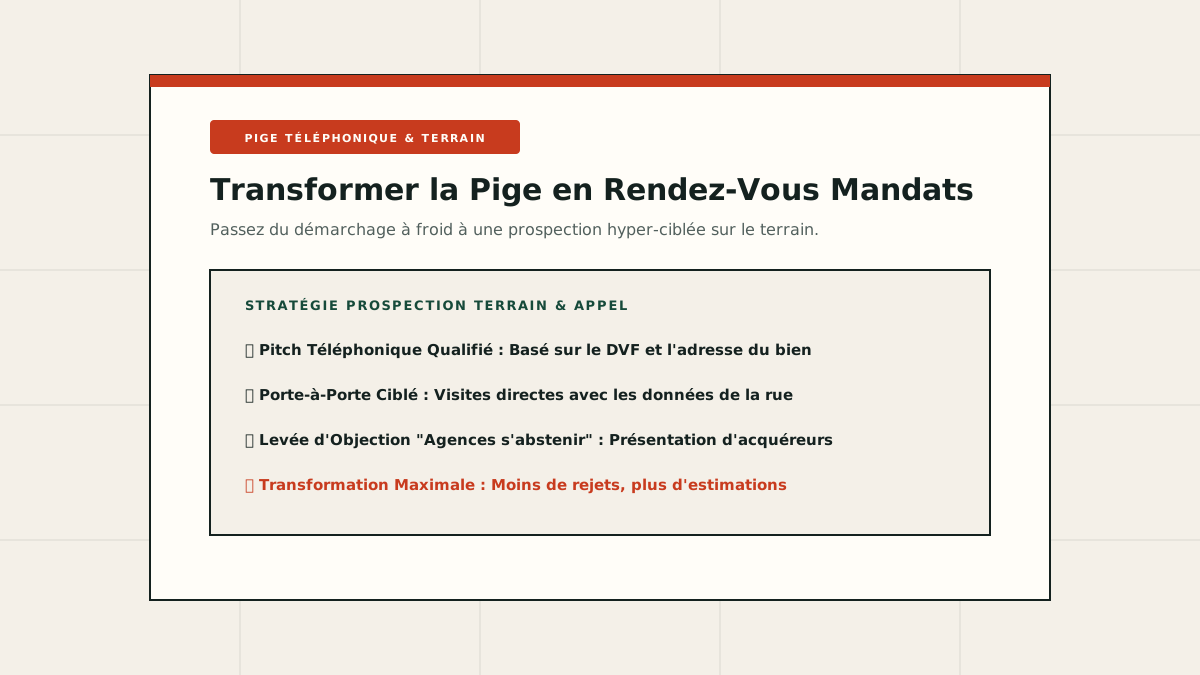
Why combine desk research with limited field observation?
Phone prospecting is fast but can become generic when the caller knows only the headline and asking price. Field observation adds local context, but it becomes inefficient and intrusive when professionals visit addresses without a clear reason.
A responsible hybrid process uses desk research to decide whether field context is needed at all. The address can help verify street access, building type and fit with an active buyer requirement. If the opportunity is irrelevant or the seller has rejected professional contact, no field approach should follow.
Use public-space observation to understand the sector, not to approach the home. Note road layout, obvious building characteristics and nearby amenities. Do not enter a lobby, follow residents, inspect letterboxes or attempt to identify the seller through neighbours.
How can you compare prospecting channels responsibly?
| Channel | Useful preparation | Appropriate objective | Main safeguard |
|---|---|---|---|
| Portal message | Listing reference and buyer fit | Ask whether a relevant discussion is welcome | Respect the platform wording and refusal |
| Telephone | Identity, purpose and concise question | Confirm interest in a brief exchange | Check applicable calling and opposition rules |
| Professional letter | Verified address and factual context | Offer a clearly identified service | Avoid repetition and misleading personalisation |
| Field observation | Defined street-level question | Understand public surroundings | Do not seek access or doorstep contact |
| Scheduled meeting | Seller's express agreement | Discuss needs and service | Be transparent about role and terms |
No channel carries a universal response rate. Measure your own compliant process and optimise for relevant, accepted conversations rather than the volume of attempts.
How should you prepare a qualified prospecting contact?
1. Confirm the source and purpose
Save the listing URL, reference and date. Link the property to a real service purpose, such as an active buyer brief or a requested market discussion. “The address is available” is not a legitimate objective by itself.
2. Verify the candidate address
Compare the town, photographs, building type and road layout. Mark the confidence level and do not state a guessed street number as fact. Consult DVF or cadastral sources separately only when they answer a defined question.
3. Check contact preferences and rules
Read the advert for “agencies please refrain” or other restrictions. Apply your organisation's process for telephone, electronic and postal contact, privacy notices, opposition and retention.
4. Prepare one useful point
Choose a fact you can document, such as genuine fit with a current buyer search or a question about a property feature. Do not manufacture a recent sale, buyer or valuation to create urgency.
5. Define the stopping rule
One refusal should end the attempted persuasion. Record requests not to be contacted and do not switch from phone to doorstep, social media or private-number research.
What can a transparent opening sound like?
A suitable opening is short and gives control to the seller:
“Hello, I am contacting you about listing [reference]. I am a property professional working in this area and want to check whether the home could fit a specific buyer requirement I currently handle. I respect that you are selling privately. Would you accept a brief conversation, or would you prefer not to receive professional enquiries?”
Adapt the wording to the actual facts and your compliance process. State whether you represent a buyer, seek a sales instruction or provide another service. Never blur those roles, and never claim a qualified buyer whose needs and financing you have not genuinely assessed.
If the seller agrees to talk, ask about their project before presenting a service. If they decline, thank them, end the call and apply the opposition. A courteous refusal is an outcome the process must handle, not a cue for a more aggressive script.
What does ethical field prospecting look like?
Field prospecting should begin with an area-level business objective, not an attempt to surprise a named resident. Walk or drive the public street to understand housing types, access and current local activity. Use scheduled seller meetings for property-specific discussion.
Do not enter private buildings, leave material where solicitation is prohibited or repeatedly return to an address. If your organisation uses addressed professional mail, ensure the source, legal basis, disclosure and opt-out process have been reviewed. An address recovered from an advert should not automatically become a general marketing record.
Avoid photographing residents, number plates or home interiors. Any notes should be factual, necessary and retained according to policy. Delete or review them when the listing becomes stale or the purpose ends.
How can FindAddressNow support the preparation stage?
For a supported property-page URL, start an address search with FindAddressNow. The product searches for an address and coordinates. It does not identify an owner's telephone number, provide permission to visit or automatically supply DVF, DPE and cadastral analysis.
Review the How it works section and pricing options before using the service. Verify every result against the listing before it enters your qualification process.
The related guides on qualifying a private listing by address and using the cadastre to find a property explain the separate verification steps.
How should a team measure prospecting quality?
Avoid unsupported industry conversion figures. Build internal metrics that reflect both commercial relevance and compliance:
- Percentage of reviewed listings that fit a genuine brief.
- Percentage of address candidates verified before use.
- Accepted conversations by permitted channel.
- Appointments that match the stated purpose.
- Opposition requests applied correctly and promptly.
- Stale records reviewed or deleted on schedule.
Review call samples and written messages for accuracy, transparency and pressure, not only outcomes. A lower volume of well-qualified, welcome contacts can be a stronger process than a high volume that creates complaints or irrelevant conversations.
Frequently asked questions
What is the best time to call a private seller?
There is no universal best time. Follow permitted hours, the seller's stated preference and your organisation's rules. A scheduled call is preferable to repeated attempts.
Can I visit after an unanswered phone call?
An unanswered call is not consent to a doorstep visit. Use only channels and follow-up permitted by your process, and stop when the seller objects.
What if the listing has no visible telephone number?
Use the platform's messaging route where available. Do not use the address to search for unpublished personal contact details or to approach the home.
Does a verified address make the market appraisal accurate?
No. It helps select context and comparable evidence, but appraisal also depends on the property's condition, features, rights, charges and documents.
How do we compare team performance without generic benchmarks?
Use consistently defined internal measures over comparable periods. Include relevance, accepted conversations, appointments and proper handling of refusals, not only signed instructions.
How should you structure a professional prospecting audit before client outreach?
To convert prospecting leads into qualified mandates, follow this structured verification sequence:
- Analyze actual street sales in DVF: Review registered transaction records to determine true sold prices per square meter for comparable properties.
- Audit parcel geometry on cadastre.gouv.fr: Verify parcel references, plot boundaries, and annex footprints using official cadastral maps.
- Respect opposition preferences and privacy boundaries: Record all non-contact requests and refrain from soliciting occupied private space without permission.
- Present data-backed valuation reports: Base every client introduction on objective public data rather than unverified commercial claims.
Already have a listing?
Find an address