For a property finder or agent, locating a private listing helps qualify the home before any professional contact. The address can clarify the area, access and buyer fit, but it does not authorise intrusive prospecting or replace confirmation from the seller.
Quick Answer: Save the listing URL and characteristics, search for the address, then verify any candidate against the town, photographs and property type. Use the location to assess genuine buyer fit and prepare a relevant message through an appropriate channel. Respect privacy, applicable prospecting rules and any statement that agencies should not contact the seller.
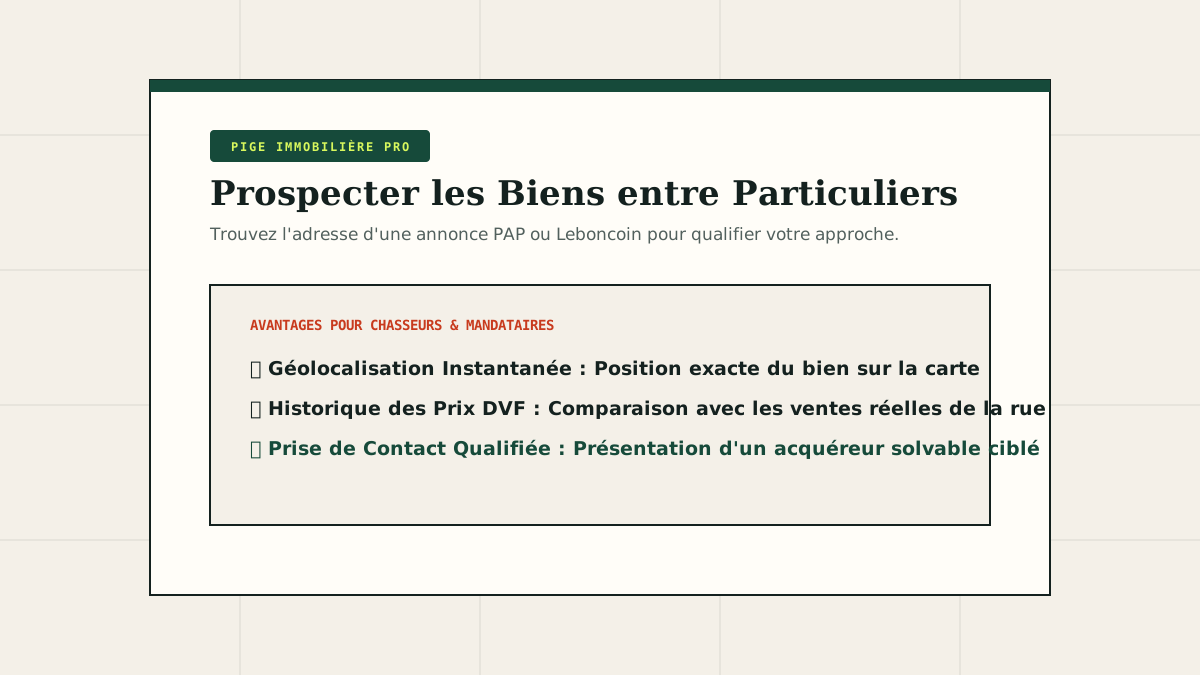
Why qualify a private listing before making contact?
Reading the listing during a cold call leaves little room to understand whether the home actually matches your market or an active buyer brief. Address-led preparation separates relevant opportunities from properties that are outside the required street, transport radius or building type.
Qualification should reduce unnecessary contact, not make it more personal for its own sake. A useful review asks:
- Does the location fit an existing, documented buyer requirement?
- Are the listing details internally consistent?
- Which public sources can add legitimate market context?
- Is professional contact invited or expressly discouraged?
- Which channel and disclosure are appropriate for the situation?
If the answer to the buyer-fit question is no, an address is not a reason to solicit a mandate. It may remain part of general market observation, subject to your organisation's data rules.
Which criteria should a professional qualification sheet include?
| Criterion | Address-based check | Professional use |
|---|---|---|
| Search area | Street, transport and practical access | Compare with the buyer brief |
| Property consistency | Building type, plot and visible exterior | Identify contradictions to clarify |
| Market context | Relevant public transaction data | Select comparables, not an automatic value |
| Planning and risks | Appropriate official sources | Prepare questions and caveats |
| Listing status | Date, reference and current availability | Avoid working from stale information |
| Contact preference | Wording and channel on the listing | Respect refusal and platform rules |
Keep factual observations separate from assumptions. An address does not confirm the seller's identity, authority, motivation or willingness to appoint an agent.
How can you qualify a private listing in four stages?
1. Preserve the source
Save the direct listing URL, portal reference, publication date, surface, rooms, floor, energy details and photographs. This creates a reproducible basis for the research and avoids mixing two similar adverts.
2. Search for and verify the address
Compare a returned location with the municipality, facade, road layout and property type. Use at least two independent clues and label the result uncertain when important details conflict.
3. Add market context carefully
Consult relevant public sources such as French DVF data, the cadastral map or planning information separately. Choose genuinely comparable transactions and record their dates and differences. Do not describe a street average as an appraisal of the listing.
4. Decide whether contact has a legitimate purpose
Link the opportunity to a current buyer brief or a clearly defined professional service. Choose an authorised channel, state your role and reason, and give the seller a straightforward way to decline further contact.
How should professionals handle “agencies please refrain”?
Treat it as a clear preference, not an objection to overcome with better address intelligence. Do not use the recovered location to visit the seller, find unpublished contact details or switch channels after a refusal.
If you genuinely represent a buyer and the platform permits an enquiry, your compliance process should determine whether and how a message is appropriate. Be transparent that you are a professional, explain the specific buyer-side reason and accept a refusal without pressure.
Record opposition according to your organisation's procedure. Check the rules that apply to telephone, electronic and postal prospecting, as well as personal-data retention. When uncertain, ask the network's compliance lead or qualified adviser before contact.
What does an address not establish for prospecting?
It does not prove that the author is the owner, that the listing remains available or that a transaction can proceed. Verify through the platform before presenting the property to a client as an active opportunity.
It also does not provide an appraisal. Condition, floor, layout, tenure, charges, work, rights and documents can materially affect a home even when street-level sales are available. Phrase market context as a range of evidence to investigate, not a verdict.
Finally, the address does not grant access. Observe only from public space and arrange every property visit through the seller or authorised representative.
How can FindAddressNow support a professional workflow?
For a listing from a supported portal, start an address search using the URL. FindAddressNow searches for an address and coordinates. Verify the result before recording it in a qualification file or sharing location conclusions with a client.
The How it works section describes the link-based process, and the pricing section lists current credit options. Check portal support before submitting a link and do not assume that every listing will produce a conclusive result.
For private listings, the guide to locating a PAP property and the portal page for Leboncoin address searches offer useful preparation steps.
How should you document and retain the research?
Record the listing source, date, purpose, confidence level and checks performed. Distinguish a confirmed location from a candidate. If information is copied into a CRM, limit access and store only what the professional purpose requires.
Set a review or deletion point for stale adverts and unsuccessful qualification. Do not keep residential addresses indefinitely merely because they might be useful later. Apply your organisation's privacy policy and document any request to stop contact.
When information is shared with an active buyer, provide only what is needed for that mandate and explain uncertainty. Do not circulate an occupied home's address in broad prospecting groups or public channels.
Frequently asked questions
Can a professional use public listing and map information?
Public availability does not remove data-protection, prospecting or professional duties. Your organisation should establish the purpose, process, retention and response to objections.
Is an address enough to estimate the property?
No. An address is the starting point for technical due diligence: verify parcel boundaries via cadastre.gouv.fr, examine street-level DVF property sales over the last 24 months, and check official energy certificates on the ADEME registry. Before any commitment, have your notary audit the last 3 years of AGM minutes and the full Technical Diagnostic Dossier (DDT).
What if the listing says agencies should not contact the seller?
Respect the instruction. Do not use the address to bypass it. If a genuine buyer-side enquiry may be appropriate, follow the platform rules and your compliance process.
How can I avoid confusing two similar listings?
Compare the URL, date, surface, rooms, floor, energy information, exterior details and photos. Keep the result uncertain when a material feature does not match.
Does FindAddressNow provide DVF or cadastral records?
The product searches for an address and coordinates from a compatible listing link. Consult DVF, cadastral and planning sources separately for the research you need.
How should you validate a private seller listing address before contacting the owner?
To qualify a peer-to-peer listing while adhering to compliance standards, follow this protocol:
- Audit parcel geometry on cadastre.gouv.fr: Verify plot boundaries and land area against official cadastral maps.
- Cross-reference street DVF sales: Analyze price per square meter against registered notary transactions for the same street over the last 24 months.
- Respect seller contact preferences: Communicate via official portal channels without forcing phone or in-person contact when discouraged.
- Deliver objective market analysis: Base initial buyer introduction on verified public data rather than unverified commercial claims.
Already have a listing?
Find an address